



Osteochondrosis of the cervical spine and other parts of the spine is widespread worldwide, affecting to varying degrees more than half of women and men aged thirty or older, as well as children.It is a particularly dangerous disease in children, affecting the discs and joints, with disastrous consequences for the developing spine.The disease causes varying degrees of complications.One of these may be a hernia, the signs of which should be considered individually.
Symptoms of cervical osteochondrosis cause the most problems for a person.This is because this area has a large number of nerve endings and fibers.In addition, the most important blood vessels supplying the brain are also concentrated here.Therefore, the main symptoms of the disease are:
- pain;
- Dizziness;
- Pharyngeal symptoms, "lump in throat";
- nausea and vomiting;
- noise and tinnitus;
- Loss of consciousness (fainting);
- lack of air;
- blood pressure spikes;
- visual impairment;
- Local temperature changes.
According to the International Classification of Diseases, Tenth Revision (ICD-10), cervical osteochondrosis has multiple sites, each with a separate code.Classification is based on the area of the spine affected and the age of the patient, with osteochondrosis being divided into "youth" and "adult".The common code for cervical osteochondrosis is M42.On the Internet, using the ICD -10 table, you can find the necessary information, including all the signs of osteochondrosis of the cervical spine.
pain caused by osteochondrosis
Episodes of pain caused by cervical osteochondrosis (ICD code -10 - M42) are a very common symptom.The attack may be limited to the neck area or may spread to the muscles of the shoulders and back of the head.
However, most patients complain of head pain.This varying degree of pain (soreness, popping) intensifies when you turn your head.A person will feel pressure on the eyeballs, discomfort near the heart, under the shoulder blades, and numbness in the arms.The onset of pain is caused by strong mechanical stimulation of the nerve endings between the vertebrae.
The branched nervous system provides thermoregulation, control of motor and sensory functions, and is responsible for the coordination of movement and muscle tone.Even invasion of receptors by disc fragments or bony growths can cause pain in cervical osteochondrosis.
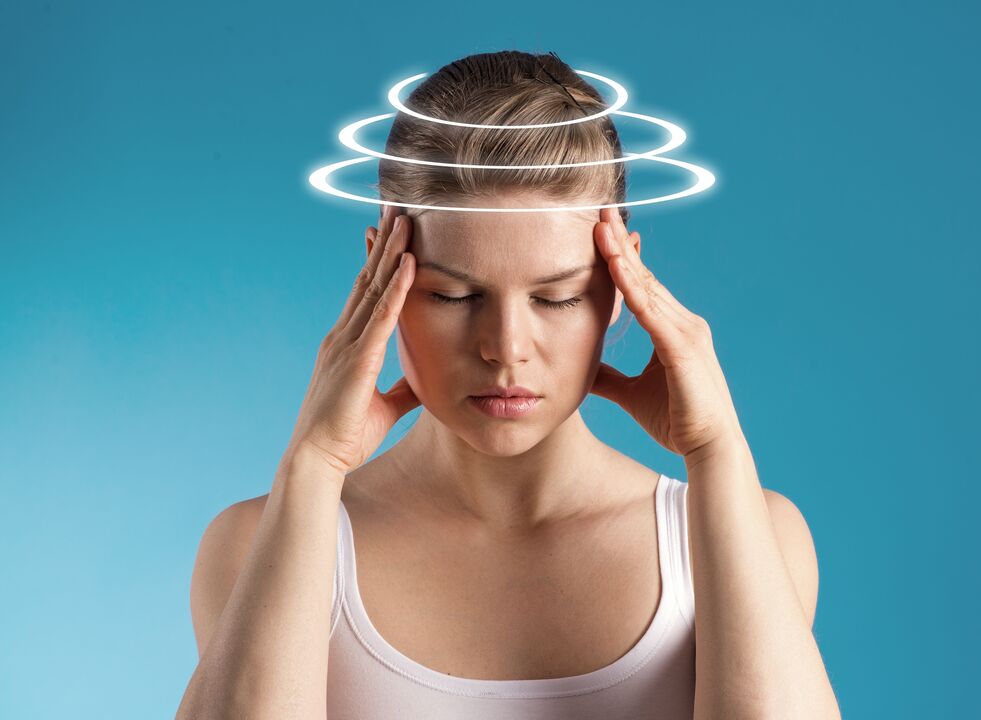
Dizziness
Dizziness is a symptom of cervical osteochondrosis (ICD-10 code - M42) that may occur after sleep, but not only.Especially if the person sleeps on a high pillow.Dizziness may also be caused by sudden movements of the head (which may be accompanied by a crunching of the vertebrae).Due to this phenomenon, the patient's eyes darken dramatically and the patient loses spatial orientation.In addition, dizziness may be combined with nausea, vomiting, and other symptoms of cervical osteochondrosis, leading to fainting.Of course, it is not the dizziness itself that needs treatment, but its cause, osteochondrosis.
Pharyngeal symptoms, "lump in throat"
Sometimes the almost only manifestation of cervical osteochondrosis (ICD code-10-M42) is so-called pharyngeal symptoms.You may experience a sore throat, a foreign body ("lump in the throat"), dryness, itching, and difficulty swallowing.
"Lump in the throat" and other pharyngeal symptoms are caused by dystrophy and degeneration of the cervical discs located at the level of the throat.
Furthermore, they are caused by compression of spinal nerve endings, neuroinflammation, circulatory collapse, and pathological tension in the pharyngeal muscles.
nausea and vomiting
Cervical osteochondrosis (ICD code -10 - M42) may present with sudden symptoms of nausea, such as a "lump in the throat," especially in an enclosed space with poor ventilation or a sudden change in position.Sometimes, patients not only feel nauseous, but also experience uncontrollable vomiting, which can be caused by turning their head, bending down, or even walking normally.Again, nausea, vomiting, and a "lump in the throat" are hallmarks not only of osteochondrosis but of many other conditions in the body.For example, the nature of nausea and vomiting is completely different in women during pregnancy.So – diagnosis, again – diagnosis.Call in sick if necessary.

Noise (ringing) in the ears
The vestibular apparatus is supplied only by the vertebral artery system, therefore, in the case of cervical osteochondrosis (ICD code-10-M42), symptoms related to inner ear dysfunction are often observed.In layman's terms, they are called "tinnitus (or ringing in the ears)."In addition to this, varying degrees of hearing loss are also common.This is collectively known as "cochlear syndrome."
Because patients are in uncomfortable postures for a long time, they experience varying degrees of "noise, ringing" and general hearing impairment, which is conducive to the development of this disease.
Loss of consciousness (fainting)
It’s better to take sick leave without waiting for it.A patient with cervical osteochondrosis (ICD-10 code-M42) suddenly loses consciousness due to severe arterial spasm.This spasm occurs due to the invasion of nerve endings by the deformation process of the vertebrae.
Generally, patients recover quickly when receiving urgent care.To do this, the patient must be placed in a "lying" position with the legs raised.This is done to improve blood flow in the veins of the legs.
In some cases, patients experience varying degrees of motor and/or speech impairment after fainting.

lack of air
Episodes of air deprivation during cervical osteochondrosis (ICD-10 code - M42) are symptoms of phrenic nerve irritation (the nerve involved in regulating the depth and frequency of breathing).People begin to suffer from hypoxia, shortness of breath, and even suffocation.Respiratory arrest may occur during the night.If long-term hypoxia occurs, irreversible changes in brain tissue may occur.The latter can lead to difficulty concentrating and memory impairment.This is much more dangerous than symptoms like nausea, vomiting, or a "lump in your throat."
Breathing and other exercises, including yoga, have been shown to be effective in overcoming this symptom.However, yoga can only be practiced under the guidance of an experienced practitioner.
blood pressure soaring
Hypertension is a fairly common diagnosis that is the result of exacerbation of osteochondrosis (ICD code 10 - M42), which is accompanied by the development of intervertebral hernia or cervical spondylosis.
One of the main symptoms of this condition is jumps and changes in blood pressure, accompanied by dizziness and head pain.When the cervical spine area is damaged to varying degrees, so-called brain starvation often aggravates arterial hypertension.

visual impairment
Since the blood to the visual organ is supplied not only by the vertebral artery but also by the carotid artery, cervical osteochondrosis (ICD code-10-M42) causing visual organ dysfunction is less common than diseases such as "throat lump".But these situations should not be ignored, nor should the opportunity to take sick days be ignored in order to combat the disease.As a result of ocular complications caused by cervical osteochondrosis, patients most commonly complain of blurred vision, reduced visual clarity and acuity, flickering dots, and floating "spots."
Over a short period of time, vision may improve and vice versa.
temperature change
When you have cervical osteochondrosis (ICD code-10-M42), your body temperature usually does not deviate from the normal range.Its increase, a "lump in the throat," may indicate another illness (such as a cold), at which time a sick leave is warranted.But an increase in skin temperature in a part of the body is likely to occur where osteochondrosis directly damages the spine.An accurate diagnosis is needed here.
Symptoms and characteristics of cervical osteochondrosis in children
The main manifestations of cervical osteochondrosis in children are the same as those in adult men and women.However, the characteristics of headache attacks in children, for example, are slightly different.

Adults experience varying degrees of pain, starting in the occipital region and then spreading to the forehead, eyes, and ears.The pain worsens when you turn your head.But in children there was no such clear pattern.Pain is not localized in nature.
A child's headache attacks may be severe enough that he or she cannot do homework, work, or go to school, requiring a sick leave.Patients with childhood cervical osteochondrosis will try to fix their head in a certain position without daring to move it.Other symptoms of the disease are less obvious in children.But crunching and crackling sensations when turning your child's head are common.
Osteochondrosis of the cervical spine, common in children, may be the result of birth injury to the spine.
Diagnosing this disease in early childhood is not that difficult.
Symptoms of cervical osteochondrosis, if detected early, correctly diagnosing the disease in women, men and children is key, allowing you to strive for healing of the cervical spine and prevent possible complications.Struggle methods include special procedures, gymnastics and yoga classes.